
When everything feels urgent, leaders create space to think. Your brain wasn't designed to hold everything. Here's what great leaders do instead.
This weekend, my mind has felt like a browser with far too many tabs open.
In just a few days we're heading away for two weeks on a road trip. There are routes to plan, places to stay, bags to pack, and all the little things that come with leaving home.
At the same time, I'm updating my website with new Forest Therapy Walks and Grounded Leadership programs, preparing to facilitate a leadership day in nature tomorrow, making sure my business continues to run while I'm away, and juggling all the usual day-to-day commitments.
And then there was this newsletter.
Ironically, I couldn't think of a single thing to write. Not because there wasn't anything worth sharing, but because my head was so full that I couldn't hear my own thoughts. I kept opening a blank page, staring at the cursor and thinking, "What do my readers need this month?" Nothing came.
So I did the very thing I so often encourage other leaders to do. I closed the laptop and went for a walk. Somewhere between the trees and the silence, the irony wasn't lost on me.
This was the newsletter. The struggle to think clearly wasn't getting in the way of the story. It was the story.
We can't think clearly when our minds are carrying everything
We often believe that when there is more to do, the answer is to work harder. Push through, stay busy, and keep ticking things off the list.
But leadership doesn't demand more activity. It demands better thinking.
Neuroscience tells us that our brains have a limited capacity to hold and process information. When we try to juggle dozens of decisions, reminders, and unfinished tasks, particularly under stress, the very part of the brain responsible for planning, problem-solving, and sound decision-making becomes less efficient. Instead of thinking strategically, we become increasingly reactive.
Stress only compounds the problem. As stress increases, the prefrontal cortex; the part of the brain responsible for planning, strategic thinking, and sound decision-making, becomes less efficient. Instead of responding thoughtfully, we become increasingly reactive.
No wonder we struggle to create, innovate, or make good decisions when we're overwhelmed.
Why Grounded Leadership works
This is one of the reasons I believe so strongly in what I call Grounded Leadership.
Grounded Leadership isn't about escaping work. It's about creating the conditions for better thinking.
A growing body of research shows that time spent in nature restores our directed attention, improves working memory, and supports cognitive restoration after mentally demanding work. A recent systematic review published in the Journal of Environmental Psychology found that even relatively short periods in natural environments can significantly improve attention and cognitive performance.
When I walked today, I wasn't trying to solve the problem. I was simply creating enough space for my mind to settle.
And that's when the answer appeared.
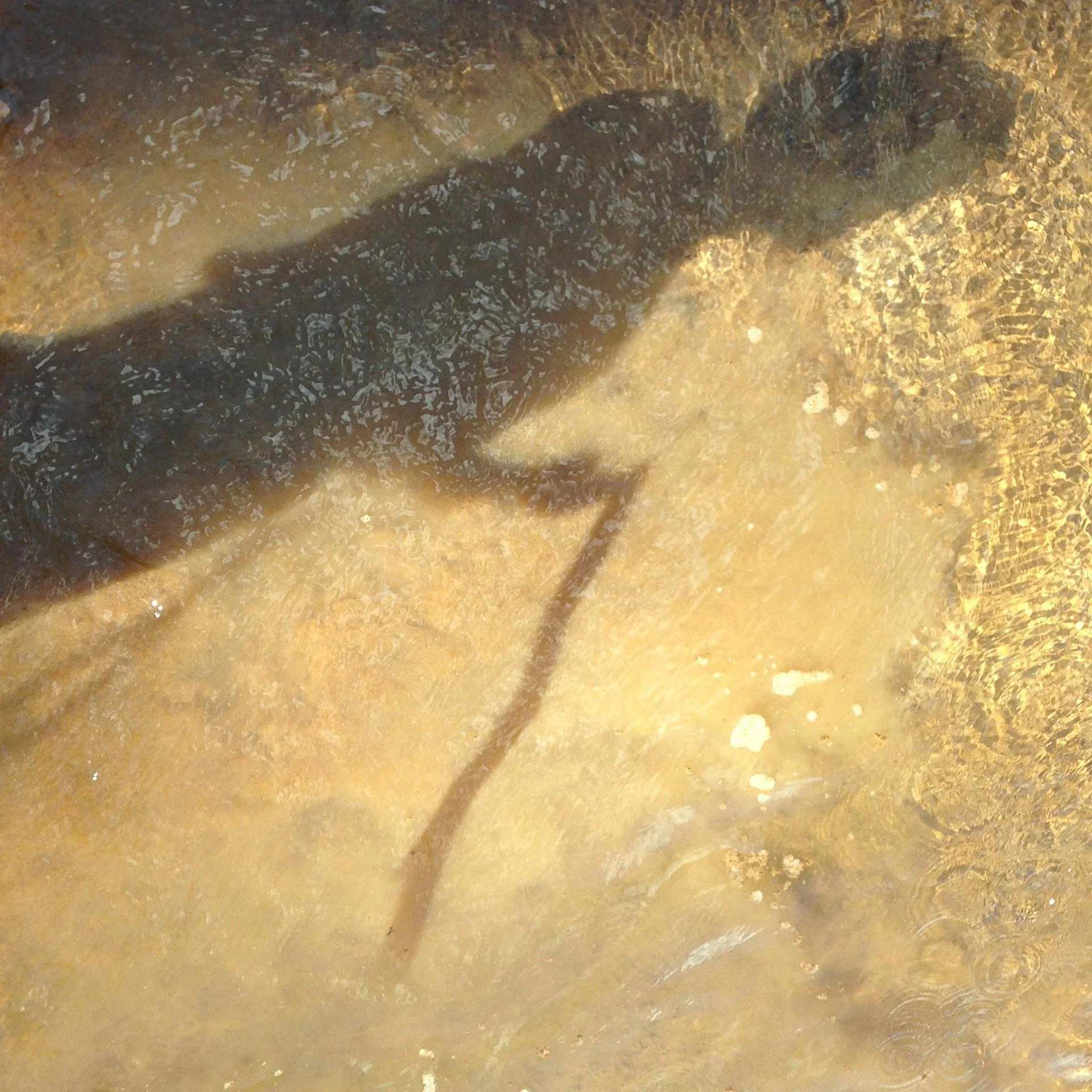
Sometimes clarity just needs time to settle
Imagine scooping a bucket of muddy creek water. If you keep stirring it, it never becomes clear. But leave it sitting quietly on the bank and, over time, the sediment begins to settle.
Nothing has been added. Nothing has been fixed. Clarity simply emerges because everything else has had the opportunity to settle.
I think our minds work much the same way. When they're constantly being stirred by emails, meetings, notifications, and endless to-do lists, clarity isn't lost.
It's simply hidden beneath the noise.
"Nature does not hurry, yet everything is accomplished." — Lao Tzu
Five ways to create space for better thinking
Empty your mind.
Write everything down. Every task, idea, reminder and worry. Your brain is designed for thinking, not for storing endless lists.
Decide what truly matters.
Prioritise the handful of things that genuinely need your attention. Accept that some things won't get done today or this week, and that's okay.
Practise Grounded Leadership.
Step away from your desk and spend time outside. Whether it's ten minutes in a nearby park or a longer walk through the bush, allow your attention to soften. You're not stepping away from leadership; you're investing in your capacity to lead.
Work deeply, then recover.
When you return, work with complete focus. I often use 60-90 minute focus blocks because they work well for me, followed by a genuine break before beginning the next task. Research into our natural attention and recovery cycles suggests alternating periods of focused work with recovery helps sustain cognitive performance over the course of the day.
Pause before you begin again.
Before moving to the next task, ask yourself:
What has become clearer?
What now matters most?
Has my perspective changed?
Sometimes those few questions are all that's needed to shift from being busy to being intentional.
A final thought
This week's newsletter almost didn't happen. Not because I didn't have anything to say. But because I was trying to think with a mind that had no room left to think.
The moment I stopped trying to force an answer and instead created space for one, the answer arrived. Perhaps that's the reminder we all need. The most productive thing a leader can sometimes do isn't to work harder.
It's to create the space where their best thinking can finally emerge.
I'd love to hear your thoughts, please comment below.
With love and gratitude,
Kathryn