
The Leadership Humanity Gap
You might think you're an authentic leader. But do the people around you experience you that way?
I had an interesting reminder of this recently.
I was catching up over lunch with a woman in my network whom I respect greatly. We were talking about strength and where women find their strength, and she asked me where I found mine. I started to share parts of my own story, experiences that have shaped me, challenged me, and contributed to who I am today.
When I finished, she looked at me and said, “So, you are human?”
I laughed, but the comment stayed with me. Because I thought I was already showing that. I consider myself an authentic person. I talk openly about vulnerability, I own up to and share my mistakes, I don't pretend to have all the answers, and I consciously try to lead with empathy and humility.
Yet someone who knew me, respected me, and was having a genuine conversation with me had somehow not seen that side of me. And that made me stop and think.
Authenticity isn't what we think we're showing. It's what other people experience.
As leaders, we often talk about the importance of authenticity. And I absolutely believe it matters. Good leaders don't need to be infallible. They don't need to have every answer. They don't need to walk into the room with certainty every time.
They need to be human.
That means being willing to say, “I got that wrong.” It means being able to say, “I don't know,” “I'm not sure what the answer is yet,” “I could have handled that better,” or simply, “What do you think?”
There is strength in those statements. Because leadership isn't about having all the answers. It's about creating the conditions where, together, we can find the answers. Yet my conversation over lunch made me question something deeper:
How authentic am I actually being?
Not according to my own definition but according to the people around me.
Research supports the connection between humility, authenticity, and the experience of being able to show up as ourselves. A study published in Organizational Behavior and Human Decision Processes examined the relationship between leader humility, follower vulnerability, and felt authenticity. Across four studies, the researchers found that when leaders demonstrated genuine humility, followers felt less vulnerable, and this was associated with people feeling more able to be authentic themselves at work. Importantly, the effect was weaker when the leader's humility was perceived as inauthentic. Read the research: “Humility breeds authenticity”
In other words, you can't fake humanity. And that matters because authenticity isn't simply about being “nice” or being liked. It influences the environment we create around us. When leaders make it safe to be human, other people are more likely to feel safe being human too.
Brené Brown and the Courage to Be Human
Brené Brown's work on courageous leadership has long challenged the idea that vulnerability is weakness. And perhaps that's what we sometimes forget as leaders. Our title doesn't make us less human. Our experience doesn't make us infallible and our position doesn't mean we need to have everything figured out. In fact, sometimes the most powerful leadership moment is when we allow people to see that we are still learning too.
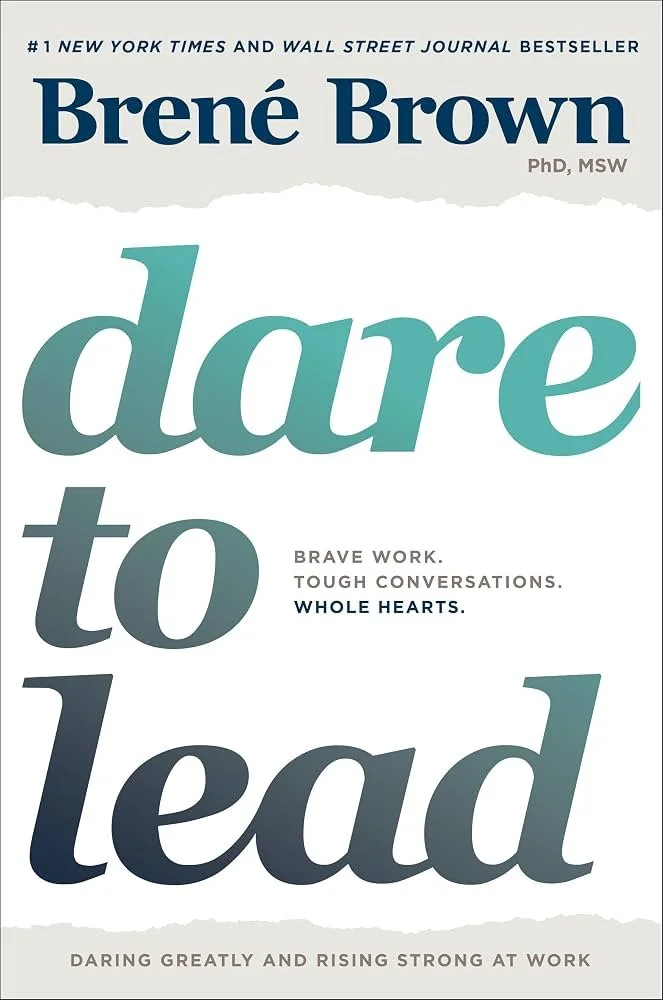
Her work suggests courageous leadership requires us to be willing to be seen when we don't have control of the outcome. In her Dare to Lead research, she identifies “rumbling with vulnerability” as the foundational skill of courageous leadership. As she puts it, “Our ability to be daring leaders will never be greater than our capacity for vulnerability.”
That doesn't mean leaders need to overshare, expose every emotion, or make their teams responsible for their wellbeing. Vulnerability, in Brown's work, is about uncertainty, risk, and emotional exposure; having the courage to show up and be seen when we don't know exactly what will happen.
In fact, it will most likely look surprisingly ordinary in leadership: admitting you got something wrong, saying you don't know the answer, asking for help, acknowledging that a decision didn't work, or being willing to say, “I could have handled that better.”
And this connects directly to the question of authenticity. Brown talks about the “armour” we wear, and for leaders, that armour can look like always needing to have the answer, needing to be right, avoiding difficult conversations, becoming defensive when challenged, or believing that our position requires us to project certainty. Her research found that this armour can move us away from our values and erode trust with the people around us.
Perhaps this is what I was reminded of in my conversation over lunch. I thought I was showing people my humanity. But perhaps some of my leadership armour was still creating a barrier that I couldn't see.
And that is why Brown's work feels so relevant. Authenticity isn't about telling people that you're authentic. It's about having the courage to let them see the human being behind the leadership role.
“Our ability to be daring leaders will never be greater than our capacity for vulnerability.”
Think about the window

I keep coming back to the image of a window.
We may believe we have given our people a clear window into who we are. But leadership comes with a title, authority, expertise, and expectations. Sometimes those things create a layer of glass between us and the people we lead.
From our side, we think:
They know I'm human.
But from the other side, they may see:
She always seems to know what she's doing. She never seems rattled. I don't think I could tell her I don't know. They probably don't make mistakes.
The window may be clear to us, but not necessarily to them.
My friend's simple statement - “So, you are human?”- made me realise that perhaps some of the glass I thought was transparent wasn't.
So, what can leaders do?
1. Ask. Don't assume people experience you the way you intend to be experienced.
Ask your team questions like:
Do I come across as human and approachable as a leader?
Do you feel I acknowledge when I don't know something or have got something wrong?
Do you feel safe challenging my thinking or disagreeing with me?
Do you see me acknowledge my mistakes and learn from them?
Do you feel I demonstrate humility?
When you bring me difficult news, how safe do you feel doing so?
Is there anything about the way I lead that makes me appear less approachable or more “together” than I really am?
What would make me feel more human or relatable to you as a leader?
And then comes the hard part.
2. Listen. Don't defend, don’t explain, don't immediately tell them why their perception isn't accurate. Just listen.
Because the gap between who we believe we are and how others experience us is where some of our greatest leadership learning can happen.
3. Reflect. Sit with what you've heard.
What surprised you?
What made you uncomfortable?
What feedback are you tempted to dismiss?
What might there be some truth in?
4. Let people see more of your humanity. Not by oversharing or making your team responsible for your emotions.
But by allowing appropriate moments of uncertainty, learning, humour, mistakes, emotion, curiosity and asking for help to be visible.
5. Ask again. Authenticity isn't a box we tick, it is something we continually practise. So perhaps the question isn't:
“Am I an authentic leader?” Perhaps the better question is:
“Do the people I lead experience me as human?” Because leadership isn't about removing the glass. It's about making sure people can actually see through it.
A final thought
Perhaps the real challenge of authentic leadership is not simply being human, but having the courage to let people see that you are.
I'd love to hear your thoughts, please comment below.
With love and gratitude,
Kathryn